Business Structures in Dubai: Mainland, Free Zone & Offshore Guide
Dubai—the heart of the UAE’s thriving economy—is a global nexus for commerce, finance, and innovation. The dream of starting a business here is accessible to entrepreneurs worldwide, but the foundation of that dream lies in choosing the correct business structure. Selecting the right legal entity, be it a Mainland, Free Zone, or Offshore company, is the single most critical decision that will dictate your ownership rights, operational scope, tax obligations, and access to the local market.
For foreign investors, navigating the complex regulations and legal requirements can be daunting. At AEY Prime Ventures, we understand that clarity and strategic insight are paramount. This comprehensive guide serves as your definitive roadmap to the diverse Business Structures in Dubai, ensuring you have the knowledge to lay a legally compliant and strategically sound foundation for your venture.
The Foundational Step: The Company Registration Process UAE
Mainland vs. Free Zone: Choosing Your Operational Hub
Before diving into the specifics of each structure, it’s essential to understand the overarching lifecycle of starting a business in Dubai. While the jurisdictional authority changes (Dubai Department of Economy and Tourism (DET) for Mainland, or a specific Free Zone Authority), the high-level Company Registration Process UAE follows a clear, multi-step sequence:
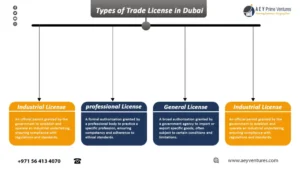
- Determine Your Business Activity and Type: Identify the exact activities your company will perform (e.g., General Trading, IT Consulting, Manufacturing). This step is crucial as it determines your license type (Commercial, Professional, or Industrial) and which structure (Mainland or Free Zone) is permissible.
- Select and Reserve a Trade Name: Choose a name that adheres to UAE naming conventions (no offensive language, no religious references, and must include the legal entity suffix, e.g., LLC, FZCO). You must check its availability and reserve it with the relevant authority.
- Obtain Initial Approval: This ‘No Objection’ certificate from the DET or Free Zone Authority confirms that the government approves the concept and allows you to proceed with the formal setup.
- Draft and Notarize Constitutional Documents: Prepare the Memorandum of Association (MoA) for LLCs or the Articles of Association (AoA) for other forms. These documents define the company’s structure, capital, and ownership. This step often requires notarisation.
- Secure a Business Location: You must have a verified physical office or trade address. For Mainland setups, this means securing a tenancy contract (which is then registered with Ejari); for many Free Zone packages, a virtual office or ‘Flexi-Desk’ may suffice initially.
- Final Submission and License Issuance: Submit all attested documents, pay the government fees, and collect your official Trade License. This marks the legal commencement of your business operations.
The most significant fork in the road for any entrepreneur in the UAE is the choice between a Mainland Company and a Free Zone Company. The strategic implications of this decision, particularly regarding market access and ownership, cannot be overstated. Understanding the core Differences Between Mainland and Free Zone is vital for long-term success.
Key Differences Between Mainland and Free Zone
Feature | Mainland Company (Regulated by DET) | Free Zone Company (Regulated by FZA) |
Market Access | Unrestricted access to the entire UAE local market, ability to bid for government contracts, and establish multiple branches across the Emirates. | Restricted access to the local UAE market. Trading in the mainland requires a local distributor or a specific mainland branch. Primary focus is international and within the Free Zone itself. |
Ownership | Now permits 100% Foreign Ownership in most sectors (following 2021 legal reforms). Previously required a 51% UAE National Shareholder (Sponsor). | 100% Foreign Ownership is a core benefit, allowing full control over the entity. |
Office Space | Mandatory physical office space (registered with Ejari) proportional to the number of visas required. | Flexible options, including Flexi-Desks, virtual offices, or smaller offices, making it more cost-effective for startups. |
Visas | Visa quotas are generally tied to the size of the physical office space and can be virtually unlimited. | Visa quotas are limited by the chosen package or office size (e.g., 2, 3, or 6 visas per package). |
Taxation | Subject to 9% Corporate Tax on taxable income exceeding AED 375,000 (from 2023). | Often retains Corporate Tax exemption (0%) provided it meets specific “substance” requirements and only deals with non-Mainland entities (Qualifying Free Zone Person). |
Deep Dive into Mainland Companies: Full Market Access and 100% Foreign Ownership Rules
A Mainland company, licensed by the DET, is the optimal choice for businesses that require full, unrestricted access to the lucrative local markets, seek direct trade relationships with UAE consumers, or plan to bid on government contracts.
The New Era of 100% Foreign Ownership Rules
The most significant legal reform impacting Business Structures in Dubai was the promulgation of Federal Decree-Law No. 32 of 2021. This sweeping change effectively abolished the long-standing requirement for a UAE national to hold a minimum of 51% ownership in most commercial activities on the Mainland.
This means that for the majority of business activities (listed on the “Positive List” for Foreign Direct Investment), foreign investors can now establish a Mainland Company Setup Guide with 100% Foreign Ownership Rules.
However, it is vital to note the remaining caveats:
Strategic Impact Activities: Certain sectors, such as banking, insurance, telecom, and oil/gas exploration, remain on a “Negative List” or are classified as strategic sectors, which may still require partial local ownership or a Local Service Agent (LSA) and/or additional approvals.
Minimum Capital: Some sectors allowing 100% foreign ownership may require specific minimum share capital investment as a condition of approval.
Setting Up a Mainland Company: The Mainland Company Setup Guide
The process for a Mainland Company Setup Guide is detailed and primarily managed through the DET.
- Activity and Name Selection: As above, select your activity and reserve the name with the DET.
- Initial Approval: Get initial approval from DET.
- Local Partner Requirement:
- For activities now allowing 100% Foreign Ownership Rules, you simply proceed to the MoA and commercial space acquisition.
- For Professional Company Setup (like a consultancy, law firm, or other service-based business), you will need to appoint a Local Service Agent (LSA). The LSA is a UAE national who facilitates government paperwork and compliance but has zero ownership or financial stake in the business.
- Formal Documentation: The most common legal form is the Limited Liability Company.
- Office Lease and Ejari: Secure a physical office space. The tenancy contract must be registered with the Dubai Land Department via the Ejari A valid Ejari certificate is non-negotiable for obtaining the final trade license.
- Final Licensing: Submit the approved MoA, Ejari contract, and LSA agreement (if applicable) to the DET to receive your Trade License.
Specialized Mainland Structures: LLC Company Registration and Professional Company Setup
The versatility of the Mainland jurisdiction is best seen in its legal forms, chief among them the Limited Liability Company.
LLC Company Registration in Dubai
- The Limited Liability Company (LLC) remains the most popular legal structure for Mainland commercial businesses in Dubai.
- Liability Protection: A key feature of LLC Company Registration is that the shareholders’ liability is limited to their capital contribution, protecting their personal assets from the company’s debts and obligations.
- Structure: An LLC can be formed with a minimum of one shareholder (Single-Owner LLC) up to 50 shareholders, who can be individuals or corporate entities.
- Ownership Evolution: Prior to the 2021 laws, a local sponsor was required to hold 51% of an LLC. Today, for permitted commercial activities, the LLC Company Registration can be completed with 100% Foreign Ownership Rules, a game-changer that gives international investors full control over their most valuable asset.
The Professional Company Setup (Civil Company)
Service-based businesses—such as consultancies, law firms, accounting practices, and medical clinics—must typically opt for a Professional Company Setup, often structured as a Civil Company or Sole Establishment.
License Type: These businesses require a Professional License.
LSA Requirement: While the Civil Company structure permits 100% foreign ownership of profits and assets, the establishment of the company on the Mainland requires a Local Service Agent (LSA), or a corporate LSA, to handle governmental and administrative procedures. The LSA has no ownership share, but their agreement must be notarized to ensure legal compliance. This structure is ideal for professionals seeking direct access to the UAE consumer market
The Free Zone Advantage: Free Zone Business Setup and The Global Gateway
Dubai’s Free Zones—such as Jebel Ali Free Zone (JAFZA), Dubai Multi Commodities Centre (DMCC), and Dubai Internet City (DIC)—are independent economic jurisdictions that offer significant incentives designed to attract international trade and expertise. They are the ideal structure for businesses focused on international exports, regional headquarters, or specific niche industries.
Benefits of Free Zone Business Setup
The appeal of a Free Zone Business Setup is rooted in its core benefits:
- 100% Foreign Ownership: This is the original hallmark of Free Zones, allowing expatriates to retain full equity and control.
- Tax Efficiency: Free Zones typically offer a zero-tax environment for both corporate and personal income (subject to meeting the ‘Qualifying Free Zone Person’ criteria under the new Corporate Tax law).
- Full Profit Repatriation: Investors have the freedom to fully repatriate capital and profits to their home country without restrictions.
- Streamlined Processes: Free Zone Authorities (FZAs) often have streamlined, quicker setup and renewal processes compared to the Mainland.
Free Zone Entity Types
- The most common legal forms in a Free Zone are:
- Free Zone Establishment (FZE): A single-shareholder entity.
- Free Zone Company (FZCO) or Free Zone LLC (FZ-LLC): An entity with multiple shareholders (up to 50).
Choosing a Free Zone should be driven by the specific business activity, as each zone is often sector-specific (e.g., media in DMC, finance in DIFC, trading/logistics in JAFZA).
Offshore Company Formation: Asset Protection and Holding Structures
A distinct category from Mainland and Free Zone companies, Offshore Company Formation in Dubai (specifically through jurisdictions like RAK International Corporate Centre, or RAK ICC, and JAFZA Offshore) is not for physical trading operations within the UAE.
Purpose of an Offshore Company
An Offshore company serves primarily as an instrument for:
- Asset Protection: Holding international assets such as real estate, intellectual property, or financial portfolios
- Holding Company: Acting as a parent company for subsidiary entities registered internationally.
- International Trading: Managing cross-border transactions that do not involve the UAE local market.
Key Requirements
The process for Offshore Company Formation is relatively simple, requiring minimal documentation (passport copy, proof of address, bank reference letter) and no physical office space in the UAE. Importantly, an Offshore company does not grant a UAE residency visa, distinguishing it clearly from Mainland and Free Zone entities. It’s a structure built for global financial architecture, not local operation.
Advanced Structures: Branch Office Setup in Dubai
Established international or local businesses looking to expand their presence without creating a new, separate legal entity often opt for a Branch Office Setup in Dubai
Characteristics of a Branch Office
- Legal Status: A branch is a legal extension of the parent company; it is not a separate legal entity. The parent company retains 100% liability for the branch’s operations.
- Activity: The branch office is restricted to carrying out the same commercial activities as the parent company.
- Ownership: A branch, whether set up in a Free Zone or on the Mainland, can be 100% owned by the foreign parent company.
- Mainland Requirement: For a Mainland Branch Office Setup in Dubai, the company must appoint a UAE national or a corporate entity as a Local Service Agent (LSA). Similar to the professional company setup, the LSA only handles administrative and licensing services and has no equity stake.
- This structure is ideal for multinationals and major corporations seeking to leverage their existing brand and corporate identity directly in the UAE market.
Evolution and Adaptation: Changing Business Structure in Dubai
The dynamic nature of the Dubai market means businesses often need to adapt. A key part of the regulatory framework is the ability for entrepreneurs to navigate the legal process of Changing Business Structure in Dubai.
Whether due to market growth, regulatory shifts, or strategic pivots, companies may need to:
- Change Business Activity: Adding, removing, or changing the primary commercial or professional activity listed on the trade license. This requires an application to the DET or FZA and, for Mainland LLCs, an amendment and notarisation of the Memorandum of Association (MoA).
- Convert Jurisdiction (Migration): Moving from a Free Zone to the Mainland (or vice-versa) is a complex process often referred to as “migration.” This usually involves liquidating the original company and re-registering it as a new entity in the desired jurisdiction, following all the standard setup procedures for the new entity (e.g., securing new approvals, a new MoA, and new office space).
- Change Legal Form: Restructuring from a Sole Proprietorship to an LLC, or changing the trade name. This requires shareholder approval (for corporate entities) and formal amendments to the constitutional documents and resubmission to the relevant authority (DET or FZA).
- Navigating these changes demands meticulous attention to corporate governance, adherence to local laws, and securing timely approvals to ensure continuous legal compliance and avoid penalties.
Conclusion: Partner with Aey Prime Ventures for Strategic Clarity
Choosing the optimal legal structure is the bedrock of your success in Dubai. The recent introduction of 100% Foreign Ownership Rules has fundamentally reshaped the landscape, offering unparalleled opportunities for global investors, but the necessity of understanding the subtle yet crucial Differences Between Mainland and Free Zone remains.
Whether your vision requires full market penetration via a Mainland LLC Company Registration, global efficiency through a Free Zone Business Setup, asset management via Offshore Company Formation, or strategic expansion through a Branch Office Setup in Dubai, the choice must be made with precision.
Don’t leave the future of your enterprise to chance. Aey Prime Ventures specializes in guiding entrepreneurs through the entire Company Registration Process UAE, from initial consultation on Professional Company Setup requirements to managing the legalities of Changing Business Structure in Dubai. Contact us today to turn your business ambitions into a legally sound reality.