
The Complete Mainland Company Setup Guide Dubai : Achieving 100% Foreign Ownership in Dubai
The Dubai Mainland is the premier jurisdiction for international businesses aiming for unrestricted access to the UAE market. Governed by the Department of Economy and Tourism (DET), a Mainland license is the passport to trading directly with local customers, engaging in government tenders, and establishing a full commercial presence across all seven Emirates.
Following the landmark legal reforms of 2021, the appeal of the Mainland has skyrocketed, primarily due to the introduction of 100% Foreign Ownership Rules across the vast majority of commercial and industrial sectors. For the foreign investor, this eliminates the historical need for a 51% local sponsor, granting you complete control and profit repatriation.
This detailed guide provides the essential, step-by-step process for a successful Mainland Company Setup Guide in Dubai in 2025 and beyond.
Step-by-Step Mainland Company Registration Process
Setting up a Mainland company is a structured process that moves logically from initial planning to final licensing. Adhering to the correct sequence, often with the support of a PRO or consultant, is critical for speed and compliance.
Step 1: Define Your Activity and Legal Form
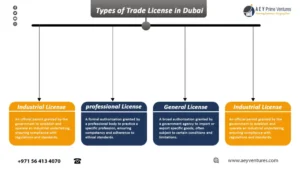
The foundation of your license is your business activity. Dubai’s DET lists thousands of activities, each categorized under one of three main license types:
Commercial License: For trading, general import/export, retail, and sales.
Professional License: For service-based businesses, consultancies, legal firms, and accounting. (Often requires a Local Service Agent, even with 100% foreign ownership).
Industrial License: For manufacturing, production, or processing goods.
Simultaneously, you must choose your legal form. The most common structure for commercial and industrial setups is the Limited Liability Company (LLC), which offers robust personal liability protection.
Step 2: Name Reservation and Initial Approval
With your activity defined, the next official steps are:
Trade Name Reservation: Submit at least three proposed trade names to the DET. The name must comply with local naming conventions (no religious, political, or offensive terms) and must include the legal entity suffix (e.g., LLC).
Initial Approval (Pre-Approval): This crucial document confirms that the DET has no objection to your activity, legal form, and the proposed shareholders. It officially allows you to proceed with the remaining legal formalities.
Step 3: Legal Documentation and Notarization
This is where the corporate structure is formally established through legal agreements:
Memorandum of Association (MoA): Mandatory for an LLC with two or more partners, and often a requisite even for a Single-Owner LLC. The MoA details the capital, shareholding structure, and management responsibilities.
Local Service Agent (LSA) Agreement: Required for a Professional Company Setup (Civil Company) on the Mainland. The LSA is a UAE National appointed to handle governmental paperwork and license formalities but holds zero equity or financial stake in the company.
Notarization: Both the MoA and the LSA Agreement must be legally notarized at a notary public in Dubai, usually in Arabic, or a bilingual format.
Step 4: Secure a Physical Office Space (Ejari Requirement)
Unlike some Free Zones, a Mainland company requires a legitimate physical office space to operate.
Lease Agreement: You must finalize a tenancy contract for a commercial unit (office, shop, or warehouse).
Ejari Registration: The lease must be registered with the Real Estate Regulatory Agency (RERA) via the Ejari system. The resulting Ejari certificate is a mandatory document that links your business license to a verified physical address, validating your commitment to a proper commercial setup. Your visa quota will typically be tied to the size of this registered space.
Step 5: External Approvals and Final Submission
Certain specialized activities—such as those in healthcare, finance, or education—require pre-approvals from other government bodies before the final license can be issued:
DHA: Dubai Health Authority (for clinics and hospitals).
KHDA: Knowledge and Human Development Authority (for educational institutions).
Central Bank/SCA: For financial services.
Once all approvals, the Ejari certificate, and the notarized documents are collected, the complete file is submitted to the DET.
Step 6: License Issuance and Next Steps
Upon successful review and payment of all government and licensing fees, the DET will issue your official Trade License.
With the Trade License secured, the immediate next steps are:
- Immigration Card (Establishment Card): Register with the General Directorate of Residency and Foreigners Affairs (GDRFA).
- Corporate Bank Account: Open a corporate bank account with a local or international bank.
- Visa Application: Apply for Investor/Partner visas for the owners and employment visas for the staff.
The 100% Foreign Ownership Rules and LLC Structure
The ability to secure 100% Foreign Ownership Rules is the Mainland’s greatest modern advantage. This applies to a majority of commercial and industrial activities, meaning international investors can fully own their LLC Company Registration without needing a local Emirati partner to hold the majority stake.
This full ownership provides:
- Complete Control: Full decision-making authority over all operations, strategy, and financials.
- Full Profit Repatriation: All profits are retained by the foreign shareholder(s).
- Simplified Governance: Reduced administrative complexity by eliminating the local partnership agreement.
However, be aware that strategic sectors (e.g., defense, certain telecommunication activities, and some forms of media) remain partially or fully restricted and may still require a local partner or higher minimum capital.
3. Understanding the Mainland Company Setup Cost (2025 Estimate)
The Mainland Company Setup Cost is highly variable, depending on your license type, the number of activities, and the office space required. It is generally higher than a minimal Free Zone package due to the mandatory Ejari-registered office.
The costs are broadly categorized as follows:
Cost Component | Typical Estimate (AED) | Notes |
Initial Fees | 5,000 – 10,000 | Includes Trade Name Reservation, Initial Approval, and Commercial Permit fees. |
License Fee (Annual) | 10,000 – 25,000+ | Varies based on license type (Commercial is generally higher than Professional). |
Legal/Notary Fees | 1,500 – 4,000 | Cost for notarizing the MoA and LSA Agreement (if required). |
Mandatory Office Cost | 15,000 – 30,000+ | Annual rent for minimum physical office space (Ejari is 5% of the annual rent). This is the main cost differentiator. |
Investor Visa Fees | 3,000 – 5,000 per visa | Fees for entry permit, medical test, Emirates ID, and change of status. |
PRO Service Fee | 5,000 – 15,000 | Annual fee for managing all government submissions, renewals, and visa processing. |
Estimated Total First Year (Basic Setup) | AED 40,000 – 65,000+ | This excludes substantial external approvals or specialized equipment. |
Note: Always seek a tailored quote from Aey Prime Ventures, as costs fluctuate based on government tariffs and the specific nature of your business activity.
The Aey Prime Ventures Mainland Advantage
The Mainland offers the ultimate commercial flexibility, but the process involves multiple governmental touchpoints (DET, RERA, Notary, GDRFA). Working with an expert like Aey Prime Ventures ensures your Mainland Company Setup Guide is executed flawlessly. We streamline every step, from securing your 100% foreign ownership approval to negotiating and registering your Ejari contract, allowing you to focus on launching your business with full confidence.